Trout fishing is one of the most captivating activities for nature lovers, whether they are just starting out or are experienced anglers. The trout, an agile fish much appreciated for the challenge it offers, makes every outing on the water a memorable experience. In this detailed guide we will explore the most effective trout fishing techniques, the equipment you need and practical tips that will improve your experience, whatever your level.
Trout – the magnet that draws adventurers to the bank
If you asked ten anglers why they keep coming back for trout, each of them would tell you something different: one would praise the iridescent colours, another the speed in the water, and a third would admit with a mischievous smile that it is the only fish that keeps him “switched on” from the first cast to the last catch. The truth is that the trout – whether brown, rainbow or brook – has its own magic: it lives only in clean water, feeds selectively and is not easily fooled. That is exactly why catching one becomes a special kind of satisfaction.
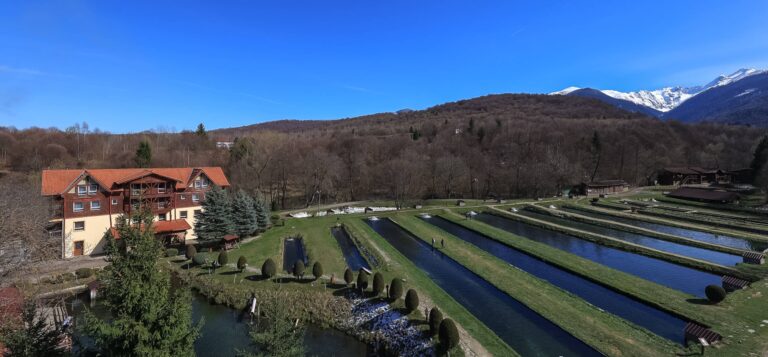
What is more, Complex Albota in Făgăraș Land offers a natural setting that looks straight off a postcard: clear lakes, rustling fir trees in the background and the Făgăraș Mountains reigning on the horizon. Anyone who tries their luck here quickly discovers that fishing is not only about fish, but about quiet, unhurried time and the feeling that time has been suspended.
Understand trout behaviour and you will catch twice as much
Let us go a little further into the “psychology” of this fish in order to decipher its movements:
- Sensitive to oxygen and temperature – trout love cold water that is rich in oxygen. When the thermometer goes above 16–17 °C, you will usually find them in deeper, shaded areas or in the current.
- A visual hunter – its large eyes let it detect shapes and shadows from a distance. A well-presented artificial fly (or a discreet crankbait) fires up its instinct.
- A daily routine – early morning and late evening are the windows of frenzied feeding. In the middle of the day it stays more withdrawn, so “finesse” techniques can work wonders.
- Territorial – every mature fish defends its own “patrol” of the bank, which explains why repeated casts into the same spot can suddenly provoke a lightning-fast strike.
Knowing these details helps you choose not only the right bait, but also the angle of approach, the depth and the speed of the retrieve.
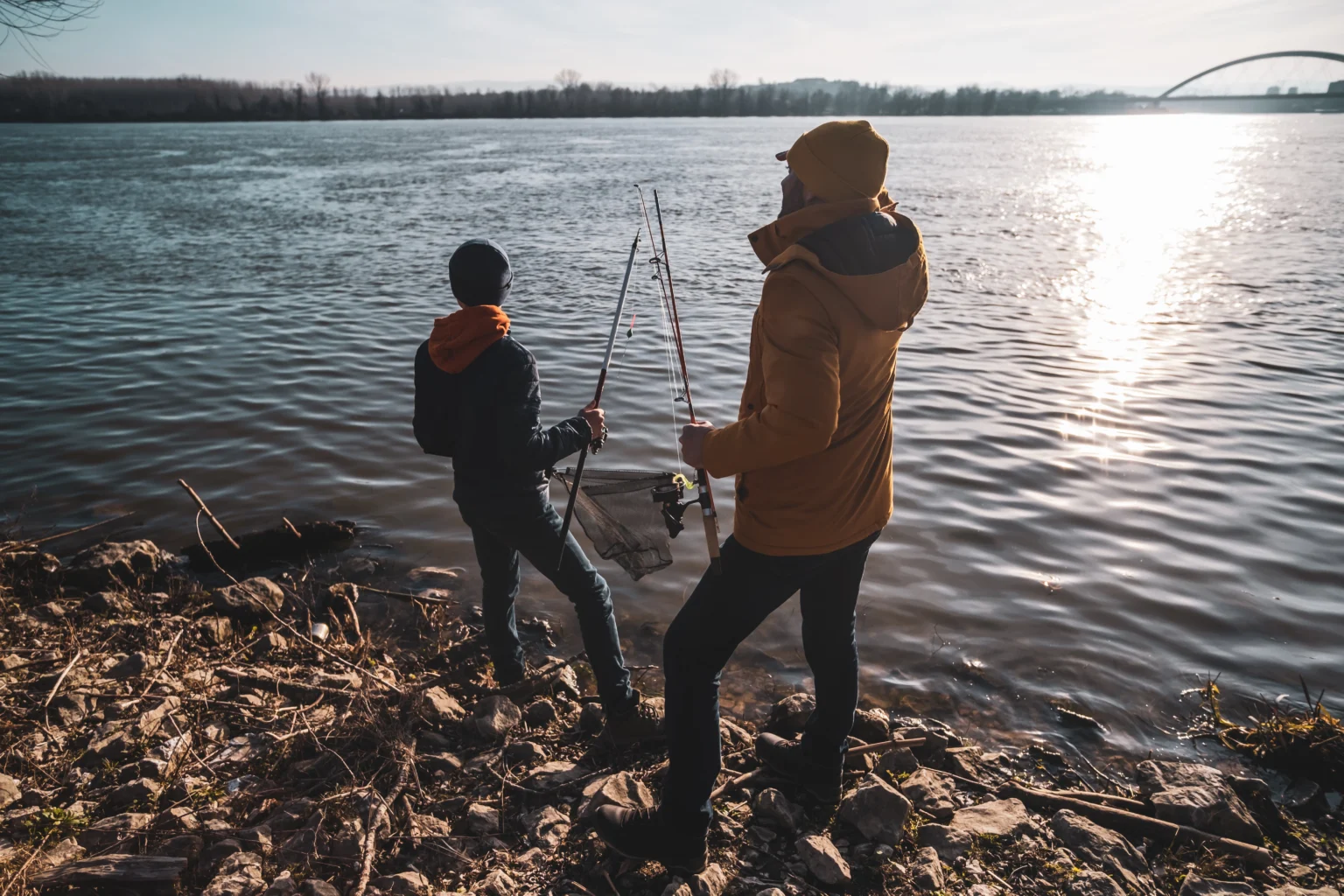
The essential gear for trout fishing
Trout do not call for the heavy rods used for catfish or the chunky floats used for carp. What they ask for instead is finesse, balance and accuracy. Here is a complete inventory:
1. The right rod
- Medium-fast action – supple enough to feel subtle vibrations, but with power in reserve for fish over 1 kg.
- Length:
- 1.80–2.40 m for narrow streams and trees overhead.
- 2.40–3 m on wide rivers or on a lake shore, where casting distance matters.
- Material: high-modulus graphite (IM8+) for low weight and a prompt response.
2. The reel
- A small to medium spool (size 1000–2500) – it keeps your line compact and does not add excess weight.
- A retrieve ratio of 5 : 1 or 6 : 1 – ideal for spinning and for keeping constant tension on the fly.
- A fine drag – trout make short bursts; a micro-adjustable drag saves many fish.
3. Line and leader
- Monofilament, 0.18–0.22 mm: stretchy, forgiving of mistakes, perfect for beginners.
- Fluorocarbon, 0.16–0.20 mm: invisible in clear water, resistant to abrasion (rocks, logs).
- Braid, 0.08–0.10 mm: maximum sensitivity, but it needs a fluoro leader so that you do not spook the fish.
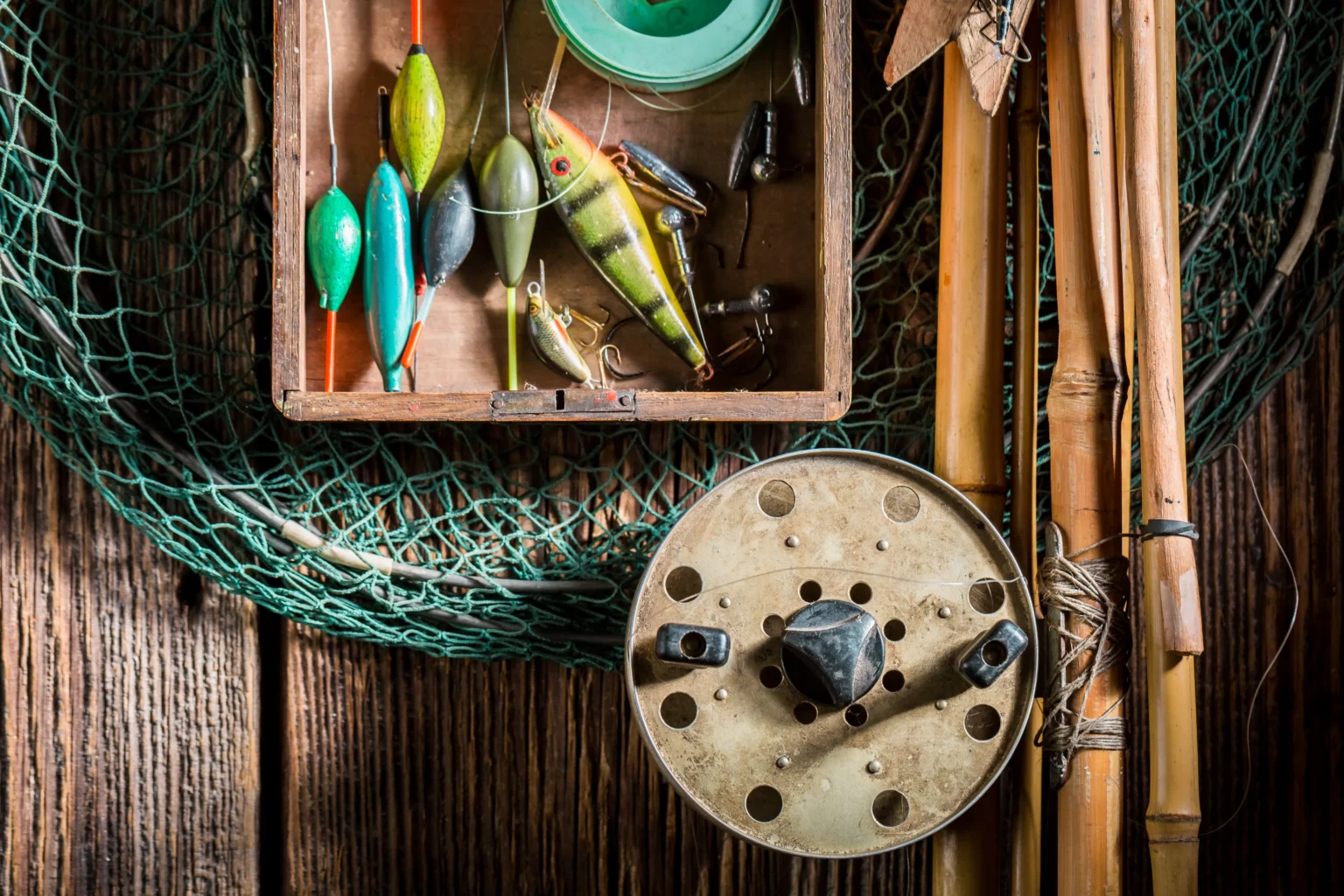
4. Basic baits and lures
- Spoons (3–7 g) – the classic “Mepps” in silver, gold or with red spots is lethal.
- Minnow crankbaits (4–6 cm) – an agitated action, natural colours (brown trout, rainbow).
- Soft lures (mini twisters, grubs) – on a 1–3 g jig head for slow fishing.
- Artificial flies – dry flies, nymphs, streamers (see the section devoted to fly fishing).
5. Accessories you cannot do without
- Waders in thin neoprene or a breathable fabric – thermal comfort and mobility.
- A landing net with rubber mesh – it protects the trout’s slime coat when you land it.
Polarised glasses – the UV filter smooths your brow and shows you the corner where fish are rising to insects.
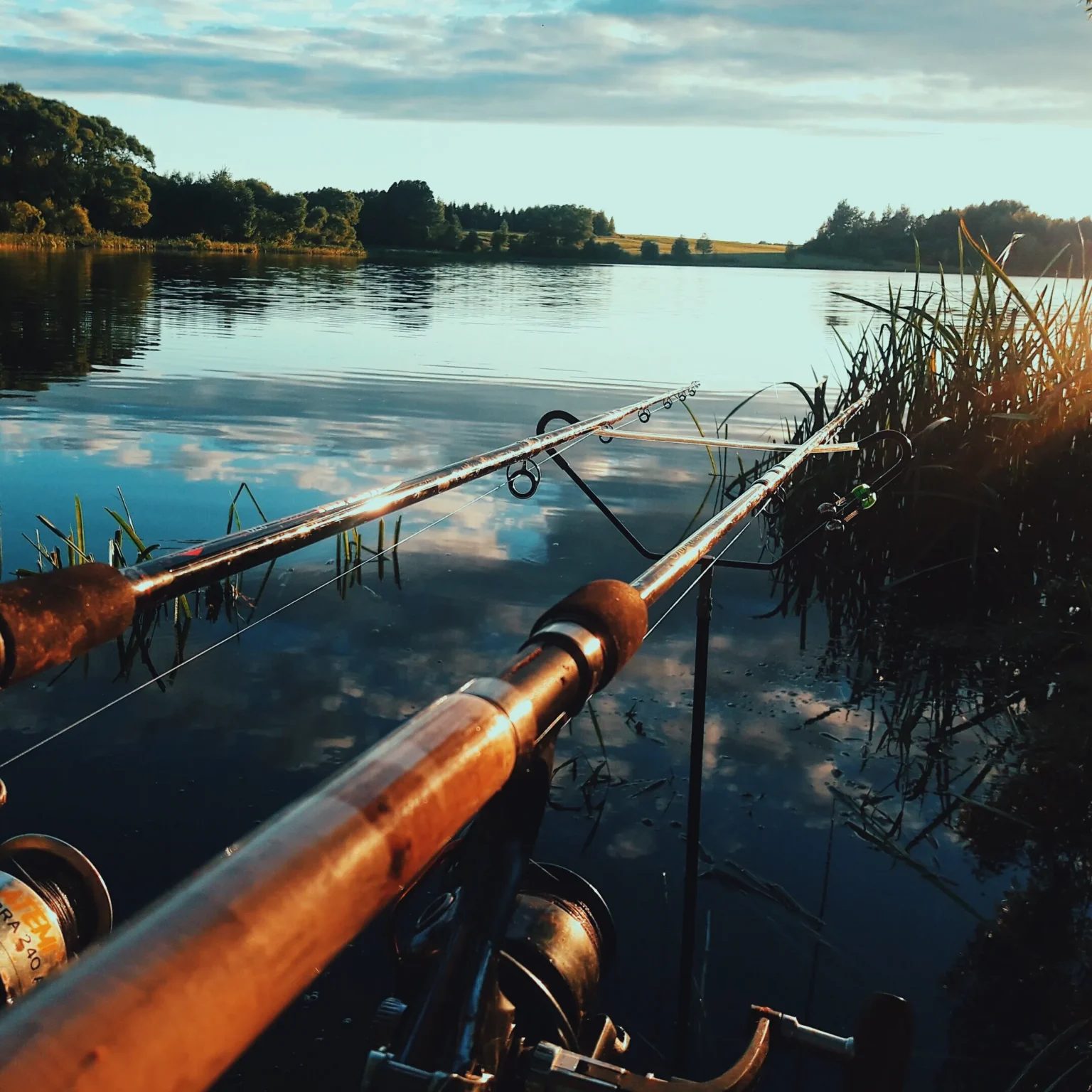
Techniques within reach of beginners
When you first step onto the jetty, you do not want to make life complicated. Start with methods that bring quick success and learn to “read” the water.
Fishing with natural baits – simple and effective
- Earthworms and maggots – mount them on a no. 8–10 hook, 0.18 mm line, minimal weight (2–3 g). Cast upstream and let the current carry the bait naturally.
- Terrestrial insects – crickets, grasshoppers or large ants, hooked carefully through the back, land easily on the surface film. The spectacle when the trout breaks the surface is guaranteed.
“Light” spinning
- The spoon: cast downstream, let it sink for 1–2 seconds, then retrieve at a steady pace. Vary the rhythm every five casts.
- Micro twisters: lift them with short movements of the rod tip so that they imitate injured baitfish.
Floats & bobbers (float fishing)
- A rig with a slim float (1 g), stopper set at 40–60 cm. Ideal on the Albota lakes, where the trout patrol at mid depths.
- Bait: sweetcorn kernels, rainbow trout cannot resist them.
A little tip: use barbless hooks. They do not injure the fish.
Intermediate level – when you want to beat your first records
After the first few months of practice, the time comes to add finesse and variety.
Spinning with suspending crankbaits
- The “jerk-pause” technique: two short jerks, then a 2-second pause. The strike usually comes during that pause.
- Natural colours vs. attractor colours: clear water calls for “ghost” shades; after rain, you can go aggressive (chartreuse, fire-tiger).
“Slow jigging” tactics on the river
- A 1.5 g micro jig: cast upstream, let it “skid” between the boulders, lift the tip gently. You are imitating the larvae that come loose from the stones.
- Constant contact: keep the line slightly tensioned; the bites can be very faint.
Drop-shot for trout
- A vertical rig: the weight 40 cm below the hook, an artificial worm attached at right angles. Perfect on the lake when the trout are suspended.
Minimal vibration: just twitch the rod tip, without retrieving.
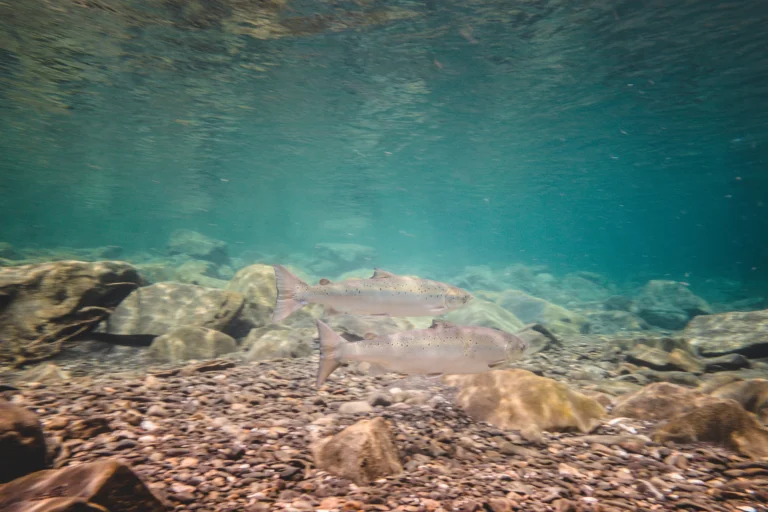
Fly fishing – pure art and the ultimate challenge
Nothing matches the feeling of a dry fly drifting gracefully while a trout comes up like a rocket and takes it in a single sip. Let me go into detail:
-
The basic gear
- Rod class 4–5, length 8’6’’–9’ – the ideal compromise between precision and distance.
- A light click-drag reel – the fly reel becomes mostly a store for line, but a decent drag protects the rod.
- A floating WF (weight forward) line – it makes for easy casts with dry flies. Keep a sink-tip spare as well, for nymphs down deep.
-
Dry flies – a dance on the surface
- Adams Parachute #14 – a generalist caddis imitation; it works all season.
- Blue Winged Olive – excellent on dark days.
- Tech tip: a side presentation, 6X tippet (0.12 mm). The trout at Albota is curious, not paranoid, but the water is still clear.
-
Nymphs and indicator
- French nymphing – a long leader, line in fluorescent colours; you lift the nymph centimetre by centimetre between the stones.
- A yarn indicator – it signals any sudden stop, even the pull of a leaf.
-
Streamers for trophy fish
- Woolly Bugger in black/olive #6–#8: cast at an angle downstream, strip short-long.
Rabbit Zonker: it delivers in the depths of winter, when the big fish turn into aggressive predators.
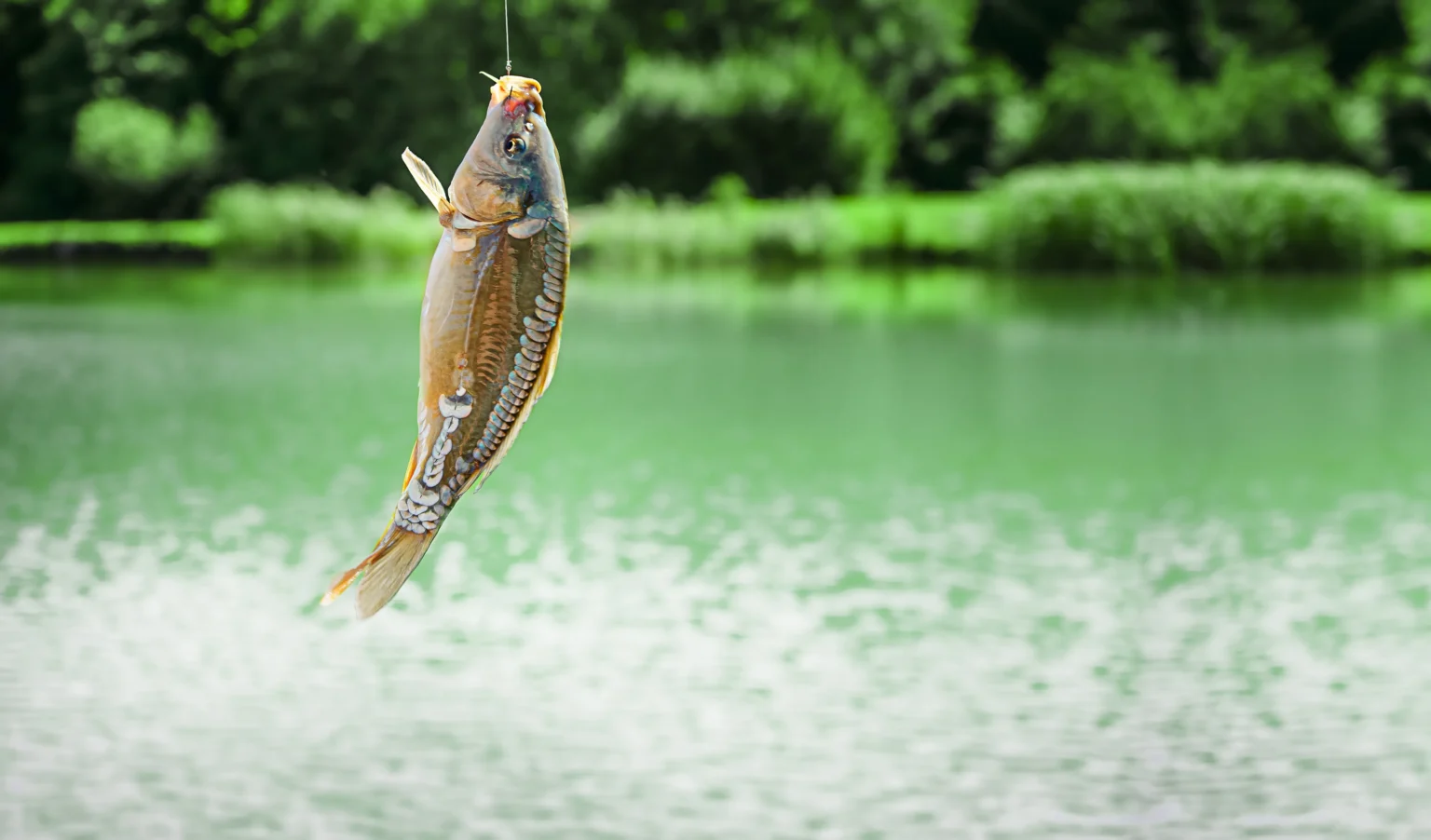
Advanced techniques for professionals
Once you have already put in hundreds of hours on the bank, it is time to raise the bar:
Night fishing
- Phosphorescent crankbaits or soft lures impregnated with glow powder.
- A slow retrieve, close to the bottom – the trout come out hunting grayling and crayfish.
Safety: head torches with a red filter (it does not dazzle), a phone in your pocket, and a life jacket is compulsory if you wade in the dark.
“Sight fishing” with polaroids
- A clear day, the sun at 45°. You spot the shapes under the lip of the bank.
- A long leader (3 m), a micro nymph and a delicate cast. You have to present before the fish sees the line.
Euro-nymphing in fast current
- Thin coloured line, 0.10 mm tippet, two tungsten nymphs.
You hold the rod at 45° and follow the path of the nymphs as if along a thread. When the indicator slows down, lift without hesitation.
Seasonal secrets – how to adapt your strategy
Spring
- Slightly high, cloudy water: brightly coloured spoons, a metallic flash.
- Trout feed greedily after winter; they change position often.
Summer
- Dawn and dusk: #16 dry flies, chironomid imitations.
- At midday, look for shaded areas and holes under the bank.
Autumn
- Big streamers: the trout is getting ready to overwinter and becomes territorial.
- Fly rodders enjoy the late-autumn hatches (Blue Dun, October Caddis).
Winter
- Slow jig on the lake, heavy nymphs on the river.
Always keep your hands warm; your reaction to a strike drops below 0 °C.
Complex Albota – a trout paradise
Located in the Arpaș Valley, Albota combines Transylvanian hospitality with a modern eco-tourism concept. Anglers will find:
- The trout ponds, for recreational fishing.
- Fishing rods on site, if you have no gear of your own.
- The fish you catch is weighed, paid for and taken home.
Ethics and conservation – tomorrow’s trout depends on you
- Leave no trace – cut line, bags, cigarette butts: they all harm the habitat.
This simple rule guarantees that years from now our children will be able to discover the same pure joy of a trout leaping after dragonflies.
Common mistakes and how to correct them
- Retrieving too fast – slow down, add pauses; the trout is working it out.
- An oversized rig – a big hook, thick line? Stop. Minimalism produces strikes.
- Fishing “at random” – watch where the current breaks, where air bubbles appear; that is their dinner table.
- Ignoring the weather – atmospheric pressure, light and wind change the game completely.
Frequently asked questions
Q: Can I fish for trout with carp boilies?
A: In theory yes, in practice it does not work. Boilies are too big and too hard; trout prefer small, soft, natural baits.
Q: What is the “magic” hour at Albota?
A: The first 90 minutes after sunrise and the last hour before dusk. That is when the insects dance on the surface and the trout rise.
Q: What licences do I need?
A: At Albota, recreational fishing is paid for separately. For the rivers you need the local AVPS permit.
In conclusion – turn every cast into a story
Whether you are holding your very first rod or have just invested in a high-end set, trout fishing remains an adventure that depends on discipline, observation and respect for nature. Kit yourself out sensibly, put the techniques discussed above into practice and, above all, enjoy the landscape – at Complex Albota the mountains, the fresh air and the shimmer of the water set the tone for a memorable experience.
Start your day with a careful cast, carry on with a lunch of grilled trout – raised here, from farm to plate – on the terrace overlooking the Făgăraș peaks, and end it around the campfire, telling the story of “the one that got away”. That is what fishing really is: a collection of simple moments that, strung together, turn into stories you remember for a lifetime.
Arpașu de Sus no. 505, Sibiu County, Romania
The map loads from Google only after you click — until then, no cookies are sent.