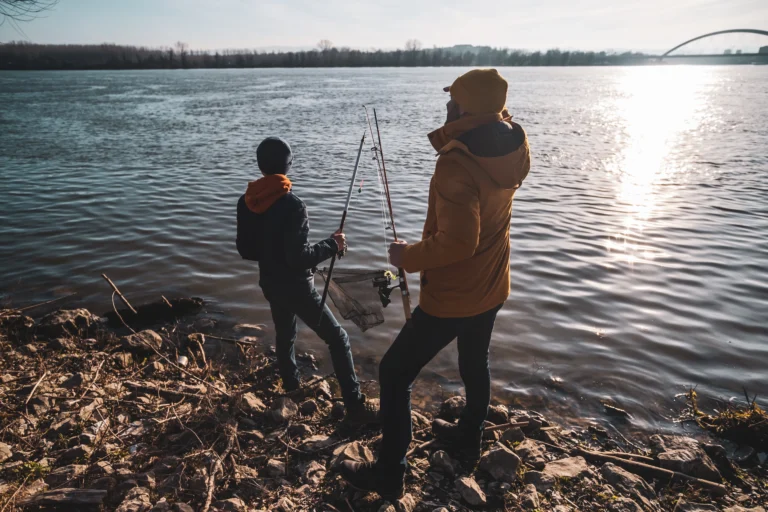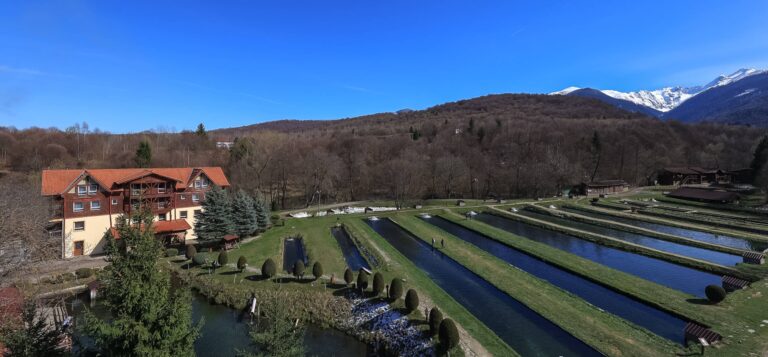
A day at Albota recharges your batteries and opens your heart to nature
“I could sit for hours watching the float rock gently on the mirror of the lake; in that moment the whole world disappears and the silence finds a voice.” – a happy angler, on the shore of the Albota lake
Why pick up a fishing rod when life feels overwhelming
One of the greatest attractions of fishing is its ability to reduce stress. Sitting by the water, listening to the sounds of nature and concentrating on the simple act of casting a line can be an excellent way to disconnect from the bustle of everyday life. Studies do in fact show that activities in nature, such as fishing, lower the level of cortisol (the stress hormone) and improve your mood.
At Albota, this effect is amplified by the quiet setting and the clean air. Whether you fish on your own or with friends, you will feel your everyday worries gradually fade as you relax and enjoy the moment.
A break does not always mean a city break in a fashion capital or an expensive spa treatment; sometimes the key to balance lies in an archaic, almost ritual gesture: fishing.
Let me take you along on a journey that begins at sunrise, when the air of Făgăraș Land smells of fresh grass and cool morning, and ends at sunset, with tired hands, a broad smile and the flawless taste of fresh trout. In a corner of the world called Complex Albota, close to Sibiu, you will discover how fishing becomes the bridge between deep relaxation, a surprisingly effective physical workout and lasting mental therapy.
In this article you will find out what science says about fishing and stress, how your muscles work without you noticing, why the happiness hormones rise when you catch (or even when you do NOT catch!) a fish, and also how to plan a perfect day at Albota – from the 5:30 alarm to the moment you close your eyes in a room that smells of fresh wood, under fluffy blankets.
Fishing and stress relief – the natural laboratory of digital detox
Cortisol drops along with the morning mist
The first thing you feel when you step out of the car at Albota at six in the morning is the cold air that clears your lungs. As you breathe in deeply, your brain is already starting to produce endorphins; at the same time the level of cortisol – the main stress hormone – falls. It is not magic, it is biology. The effect is known as nature therapy: time spent in a green setting calms the body and helps to reduce stress.
Add to that the sound of running water, the rustle of the leaves and the absence of urban noise, and you get an anti-stress cocktail that not even the most expensive meditation app can reproduce. At Albota the soundtrack is written by mountain birds and a clear stream: live music, 100 % original.
Mindfulness without a cushion or scented candles
Over the past few decades the practice of mindfulness has migrated from Buddhist monasteries to the conference rooms of large corporations. In essence, though, the concept is simple: full attention on the present. The moment you put the bait on the hook and get ready to cast, body and mind fall into line: your left hand holds the line, your right hand lifts the rod, your eyes follow the spot where you want to place the float, your breathing slows down. This sequence – repeated dozens of times – turns fishing into a session of active meditation.
And when the float starts to quiver gently, your entire universe shrinks to a red dot on the surface of the water. No more rumination (“did I send that last email?”), no more anxious projections (“what if I do not finish the project in time?”). There is only the present moment and the signal the trout sends you.
Resetting the circadian rhythm
Artificial lighting and LED screens disturb the natural production of melatonin. A day spent outdoors, following the course of the light from sunrise to sunset, resynchronises the biological clock. That means falling asleep faster, deeper sleep and, as a result, more energy over the following days. Albota, set among dense forests, shields you from light pollution and helps your body to “understand” when it is time to rest.
Section summary: Fishing at Albota lowers stress because it gives you three key elements: exposure to nature, a mindfulness ritual and quality sleep. Before you realise it, your mind empties itself of useless “tabs”, just as a browser empties its cache when you want it to run faster.
How fishing works your body – the slow sport with surprising results
Casting as an exercise in moderate explosive strength
Every cast calls on the kinetic chain of the upper limb: the wrist, the forearm, the elbow, the shoulder, the shoulder blade and the thoracic spine. The rotator muscles of the shoulder in particular – often neglected at the gym – engage in order to stabilise the joint. The result? Progressive toning without the risk of injuries caused by weights that are too heavy. Over time, recreational fishing quietly strengthens the grip of your dominant hand.
Walking on varied ground – training for the stabilising muscles
The lake shores at Albota alternate between stretches of grass, gravel and wooden walkways. Instead of sitting still on a chair, you move about in search of the “perfect spot”. Every step involves subconscious contractions of the calves and thighs, while the ankles work to keep your balance. This type of movement is called low-impact functional training and it is excellent for people of all ages.
Posture and a stronger core
To cast accurately you have to keep your spine neutral and your abdomen lightly engaged. Without ever setting foot in a Pilates class, you strengthen your lower back and abdominal muscles. Physiotherapists in fact recommend fishing to patients recovering from chronic back pain, precisely because it combines moderate movement with mental relaxation.
Vitamin D and bone density
About 80 % of Romanians are deficient in vitamin D during the cold months. Two or three hours spent in the morning sun – with proper sun protection, of course – increase the synthesis of this nutrient, which is essential for bone density and muscle function. Fishing therefore becomes a natural supplement that your body absorbs without any pills.
Fishing and emotional balance – from anxiety to joy
Neurochemistry in the service of happiness
When you catch a fish, your brain releases dopamine, the neurotransmitter responsible for the sensation of reward. At the same time, oxytocin rises if you are with friends or family, strengthening social bonds. The fascinating part? Even an unsuccessful attempt at a catch stimulates dopamine; the process itself becomes an agency of “small rewards”.
Flow – a state of total immersion
The psychologist Mihály Csíkszentmihályi defined flow as the moment when challenge and skill meet at an optimal level and the person “forgets” about time. Fishing offers exactly this formula: it is not too easy (you would get bored) but not excessively complex either. In short, entering flow reduces rumination, improves mood and increases self-efficacy.
Fishing as active meditation for ADHD and anxiety disorders
Nature therapy is gaining ground in the treatment of ADHD in teenagers. Fishing, with its clear steps and quick visual rewards, holds attention without overstimulation and reduces hyperactivity. For children taking part in weekend fishing programmes, regular trips to the water can help to temper anxiety.
Socialising at the water’s edge – community, identity and stories that bring people together
Conversations that flow naturally
When you fish, you do not have to fill every second with words. Silences are accepted and conversations flow organically between two casts: about life, about memories or simply about… worms and lures. This setting removes the social pressure of constant conversation and makes room for genuine connections.
Learning across the generations
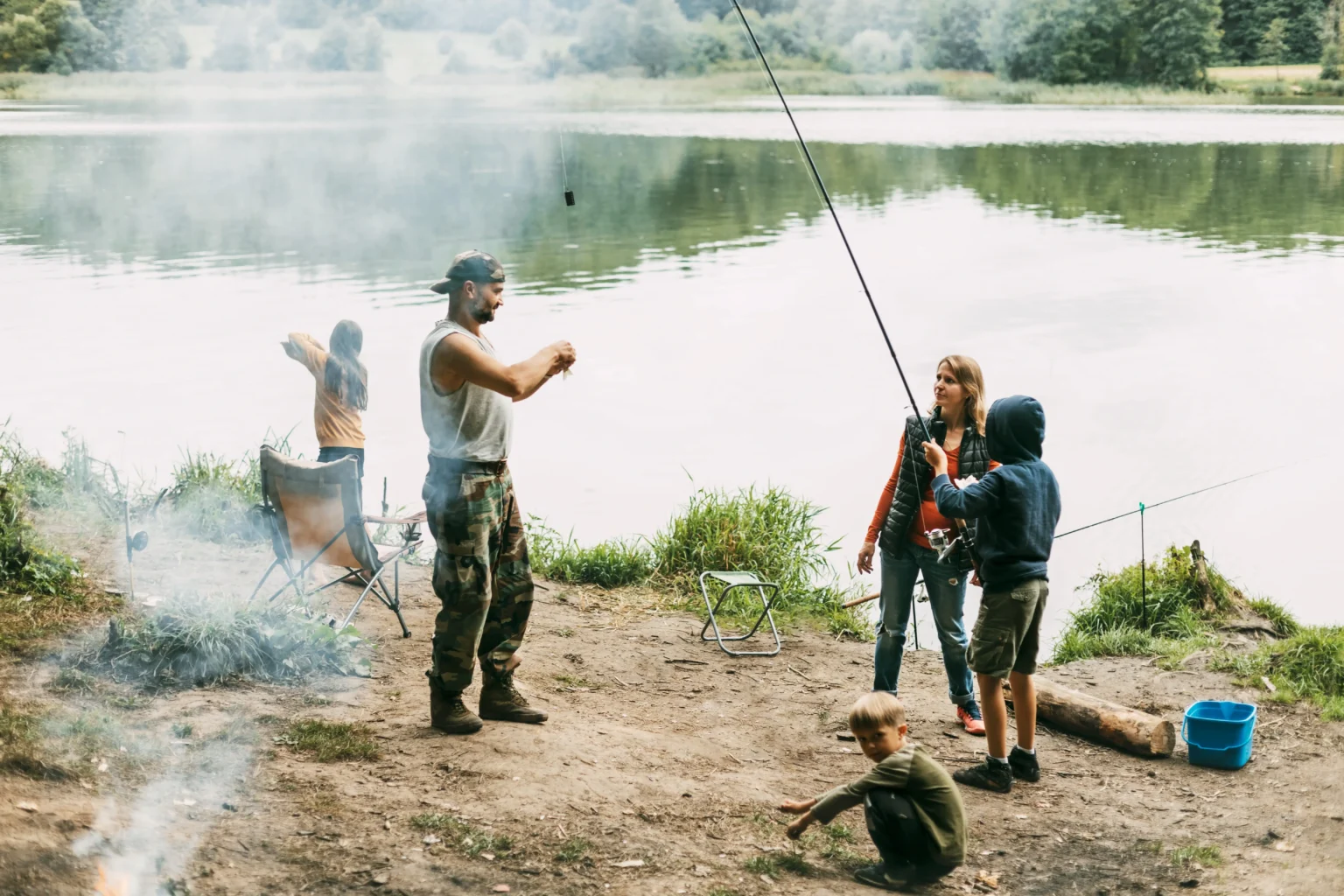
The classic picture: the grandfather shows his grandson how to put the bait on, the child cries out at the sight of the first fish on the bank, and between them an invisible line forms, as strong as the nylon on the reel. Albota runs special workshops for children so that the “know-how” is passed on, together with the values of respect for nature.
Themed events at Albota
Besides everyday fishing, the complex hosts friendly competitions, culinary evenings built around fish recipes and even workshops on tying artificial flies. Participants swap phone numbers, come back together and, little by little, a community is formed. Belonging to a group with shared interests reduces loneliness and improves mental health.
Cardiovascular health – a stronger heart, more elastic vessels
Moderate aerobic activity
The American Heart Association recommends at least 150 minutes of moderate aerobic activity per week. Two fishing sessions of 3 hours each cover that threshold without you feeling that you are “doing sport”. Your heart rate rises to 50–60 % of capacity, enough for strengthening the heart and increasing blood flow.
Lower blood pressure and blood sugar
At Albota you breathe air with fine particles below 10 µg/m³; in the city the average often exceeds 40 µg/m³. Clean air combined with relaxation lowers systolic pressure by 4–6 mm Hg after a single day. Gentle physical activity also improves insulin sensitivity, keeping blood sugar under control.
Omega-3 from farm to plate
Trout is rich in Omega-3 fatty acids, which lower triglycerides and the risk of arrhythmia. The trout served at the restaurant is raised right here. The “fish that tastes of the mountains” at Albota is said to have a higher Omega-3 content thanks to the cold water and the natural feed.
A practical guide – how to plan a day (or a weekend) of fishing at Albota
Getting ready at home
- Book by phone – call 24 h in advance to secure a place in the fishing area, especially at the weekend.
- Your own gear (optional): a medium-light rod, 0.18 mm line, bronze hooks in size 10–12. If you do not have any, do not worry, there are fishing rods on site.
- Layered clothing – mornings can be 10 °C and midday 24 °C; you will need a fleece, a technical T-shirt and a thin waterproof jacket.
- Sun protection – SPF 30 cream, a cap, polarised sunglasses (they reduce the eye strain caused by the glare off the water).
- A backpack with snacks – a nut mix, a protein bar, a flask of coffee or tea. You will have lunch at the restaurant, but keep something to hand between catches.
Arrival and first contact
- Check-in at reception, where you pay the fishing fee and receive your access wristband. The staff explain the catch & pay rules: the fish you catch is weighed, paid for and taken home.
- Choosing your stand: zones A and B are close to the restaurant (useful if you come with children), while zones C and D are more secluded, for complete quiet.
- Setting up your gear: set the float 50–70 cm from the hook – in the first hours of the day lake trout stay at medium depth.
Recommended fishing techniques
- The classic float: mealworm or trout paste. The advantage – you can see exactly when the fish bites.
- Light spinning: spinner lures, silver, size #1. Short casts close to the bank, with a slow retrieve.
- Floating bombarda: for the deeper areas; you cast far out and retrieve very slowly, imitating larvae rising to the surface.
Breaks and exploring
At midday, stop at Terasa Albota: a menu of grilled trout, fish soup, homemade pickle salad and cauldron potatoes. If you want something sweet before you go back to fishing, the pancakes with blueberry jam are legendary. After the meal, take a walk along the path that climbs to the upper trout ponds; you will see natural niches where the trout hide among the stones.
The evening and the “debrief” ritual
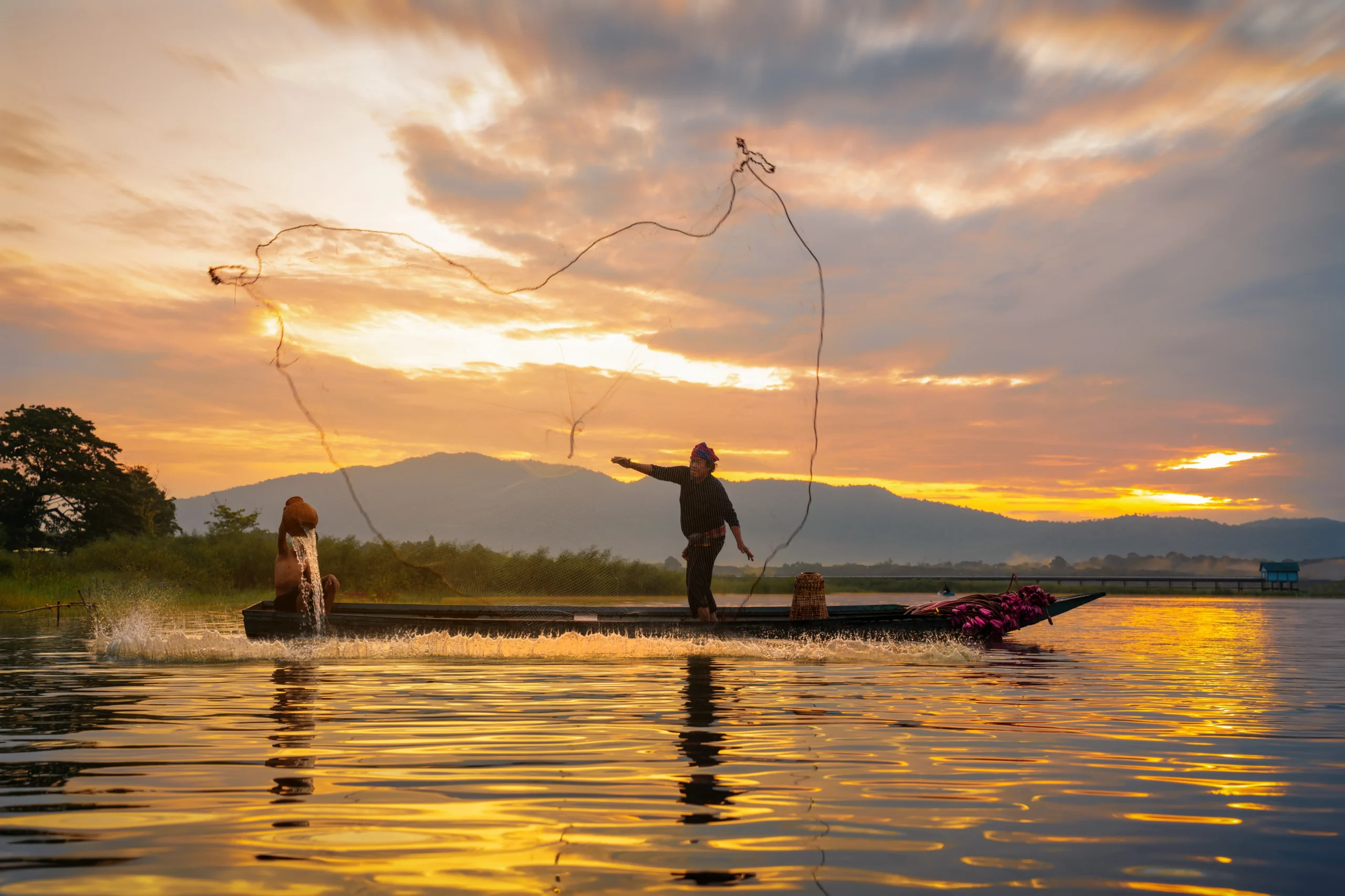
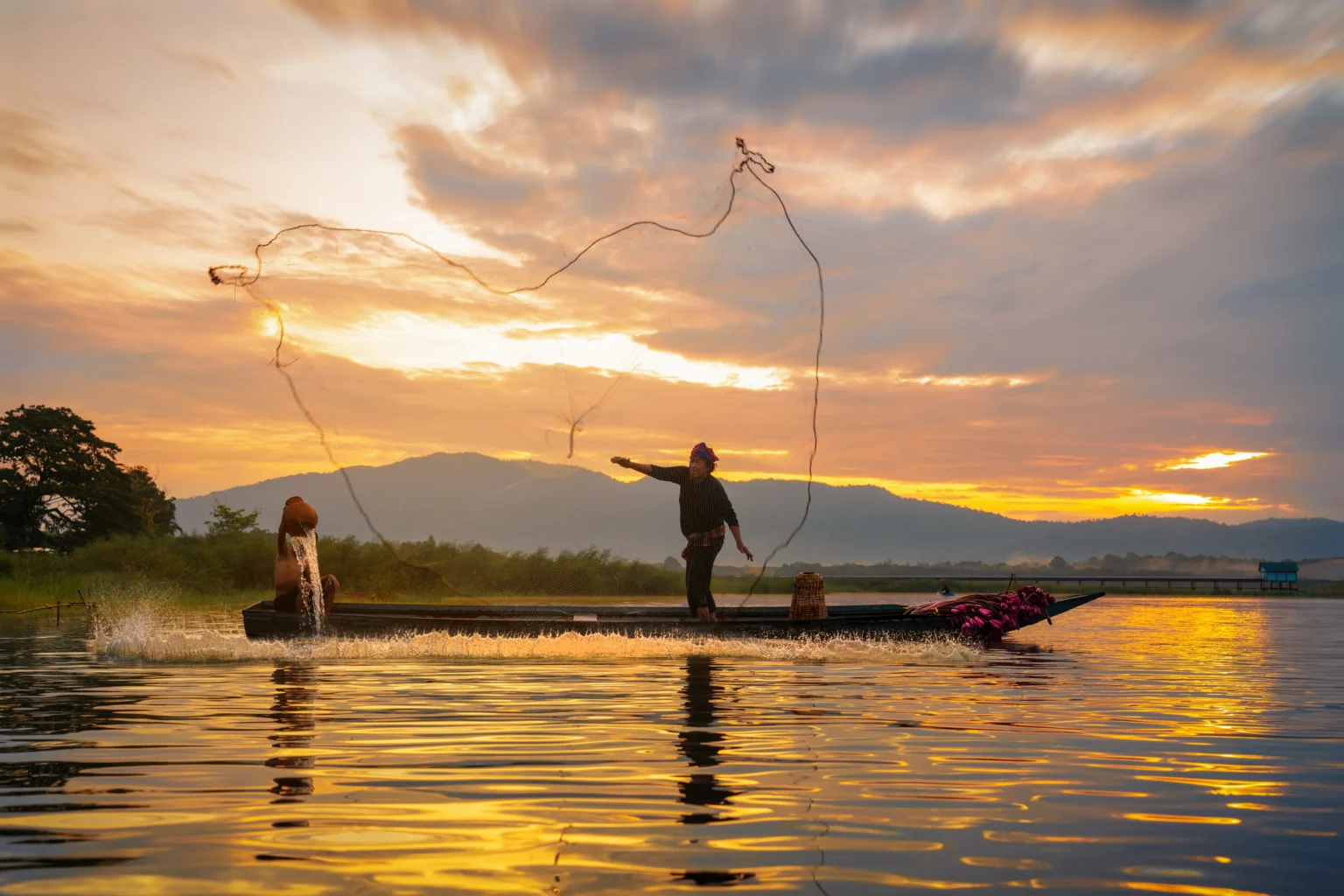
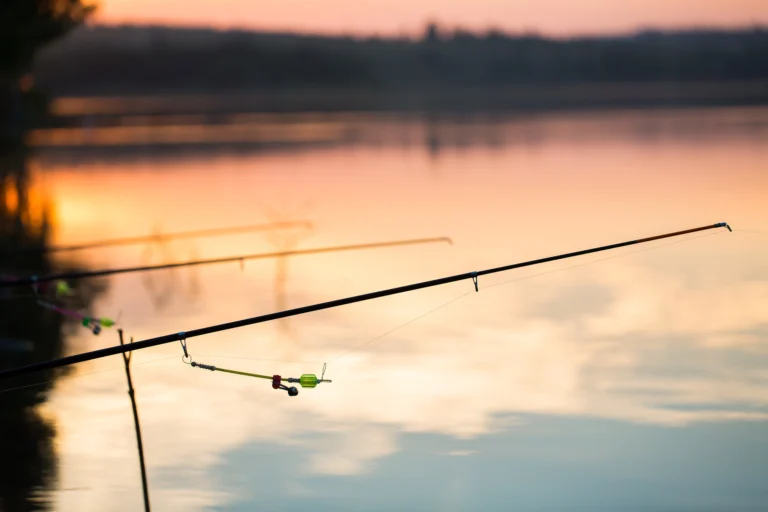
At around 18:30 the light turns golden – the perfect moment for the last casts. The photographs at sunset, with the Făgăraș ridges reflected in the eye of the lake, are worth a thousand words on Instagram (if you do decide to switch your phone on after all). The debrief in the evening takes place at the restaurant, over a trout in a cornmeal crust and a glass of Fetească Regală. The fish you catch is yours to take home; the trout on the menu is raised here – from farm to plate – and the taste is incomparable: firm, slightly sweet flesh with discreet notes of pine.
If you stay overnight, the rustic rooms, with exposed beams and balconies facing the lake, give you a deep sleep accompanied by the song of the crickets. In the morning you can start with some stretching on the jetty and a breakfast of burduf cheese and apple pie, and then… the same wonderful story begins all over again.
CONCLUSION – fishing at Albota, an investment in yourself
Fishing is not just a hobby, it is genuine holistic therapy.
- For the mind, fishing means lower cortisol, mindfulness training and entering a state of flow.
- For the body, it is a form of functional movement, accessible to anyone, that works the fine musculature, increases bone density and improves cardiovascular health.
- For relationships, it builds bridges between generations, friends and the community.
- For the taste buds, fresh trout raised at Albota and cooked at the restaurant – from farm to plate – is a feast of Omega-3 and quality protein.
Albota adds a unique ingredient: the mountain setting. The cold-water lakes, the spruce forest, the paths towards the Făgăraș Mountains and the clean air turn the activity into a multisensory experience. This is the place where you forget about time, about traffic and about a full inbox.
So, when you feel that your worries are drowning you, do yourself a favour: book a day of fishing at Albota. Open your lungs wide, let your heart beat to the natural rhythm of the water and let the rod become an extension of your patience. You will go home with fish, with stories and, above all, with a new you – calmer, more energetic, more connected to what truly matters.
Do not forget: the benefits of fishing are measured not only in kilograms of catch, but in the kilometres of quiet you add to your life. And at Albota that quiet is always just one step away from you.
Arpașu de Sus no. 505, Sibiu County, Romania
The map loads from Google only after you click — until then, no cookies are sent.