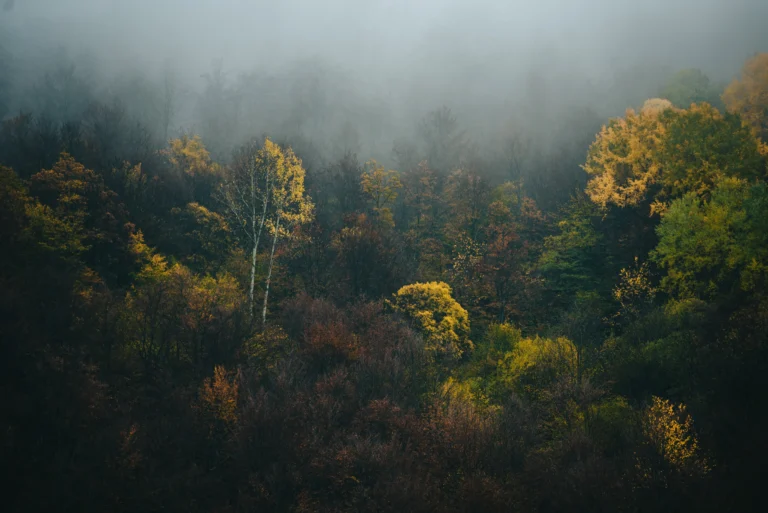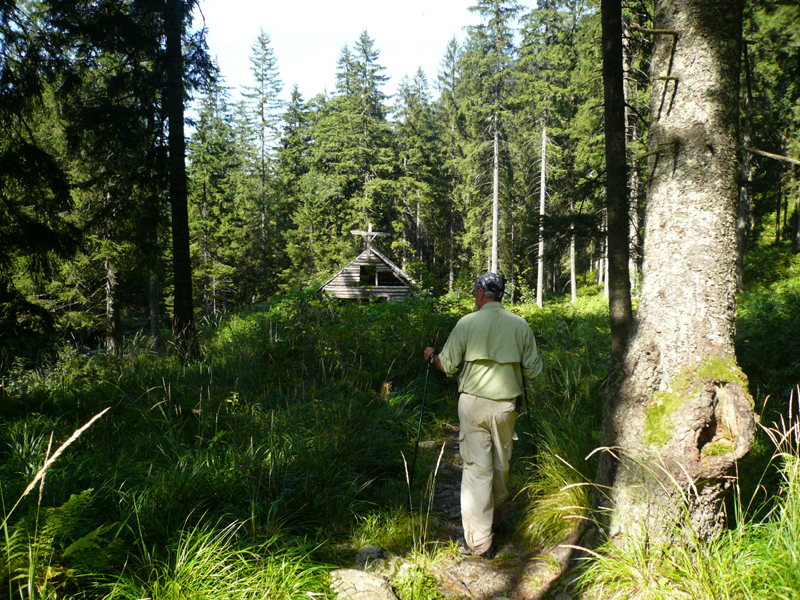
In the picturesque heart of Romania, hidden among the proud ridges of the Făgăraș Mountains, lies a small village of astonishing natural beauty – Arpașu de Sus. This oasis of quiet and greenery draws nature lovers, hikers and adventurers in search of an authentic experience, far from the bustle of the cities.
Strategically placed at the foot of some of the most impressive mountain scenery in Romania, Arpașu de Sus gives you the chance to explore spectacular mountain trails, to visit historical places of priceless value, such as the Holy Cârța Monastery, and to enjoy the rural charm of Transylvania.
Arpașu de Sus is an ideal place for those who love nature and adventure. Set in the heart of Făgăraș Land, this picturesque village offers a variety of activities for hikers of every level.
In this guide you will discover everything you need to know to turn your visit into a memorable adventure.
Here are the 5 landmarks of Făgăraș Land
Sâmbăta de Sus Monastery: when you say Făgăraș Land, you think at once of Sâmbăta de Sus Monastery, this blessed and very beautiful place, a Brâncoveanu foundation, rebuilt between 1926 and 1946 by Metropolitan Nicolae Bălan, where Father Arsenie Boca was abbot. Be sure to see the unique museum of icons painted on glass and of old books as well.
Transfăgărășan: Crossing the Făgăraș Mountains from north to south – the highest mountain range in Romania, part of the Southern Carpathians – DN7C, known as the Transfăgărășan, is a spectacular national road that links the historical region of Muntenia with Transylvania, built between 1970 and 1974. It begins in the commune of Bascov, Argeș County (next to the town of Pitești) and ends at the junction with the DN1 road between Sibiu and Brașov, close to the commune of Cârțișoara; the section from the Vidraru dam to Cârțișoara crosses mountain terrain at high altitudes.
The stud farm at Sâmbăta de Jos: At Sâmbăta de Jos you can visit the Lipizzaner stud farm, set up in 1874, which numbers more than 300 Lipizzaner horses. Anyone who is passionate about riding can spend a few relaxing hours in the company of the horses.
Hiking in the Făgăraș Mountains, Valea Sâmbetei chalet: What could be finer than coming to the mountains and hiking for a few hours up into the alpine zone of the Făgăraș Mountains, to the Valea Sâmbetei chalet. A dreamlike view will unfold before your eyes, and anyone with the courage and the right equipment can climb onto the Făgăraș ridge, the longest ridge route in Europe, all the way to the peaks of Moldoveanu, Viștea Mare and Negoiu, the highest in Romania.
The village of Rucar- Fagaras Rucar-Fagaras: set in the heart of Făgăraș Land, it is a picturesque village known for its spectacular natural scenery and its traditional atmosphere. With authentic houses and well-kept gardens, the village offers a genuine glimpse of Transylvanian country life.
Enjoy the beauty of the Carpathian Mountains and the Holy Cârța Monastery
The Carpathian Mountains are renowned for their impressive landscapes and their rich forests, offering an ideal natural setting for a relaxing getaway. In this picturesque region you will find the Holy Cârța Monastery, a place steeped in history and spirituality. Here you can explore the beauty of nature and enjoy the quiet this wonderful place offers.
Guided by legends and devotion, the Cistercian monks chose this place to raise a house of worship and contemplation, and in the 13th century their dream became reality. Today the monastery is still an oasis of quiet and reflection for all those who step into its old courtyards.
Every stone of the monastery seems to carry the imprint of time and of faith, and its Gothic architecture delights the eye and the soul of every visitor. The soft light that falls through the tall windows touches your face and invites you into its depths, where the silence is as eloquent as the prayers once spoken by the monks.
Rediscovering the past at the Cistercian Monastery of Cârța
Visiting the Cistercian Monastery of Cârța, which lies close to Arpașu de Sus, is a true journey back in time. As you approach the impressive ruins of the abbey, you will have the perfect chance to disconnect from the bustle of everyday life and to reconnect with the deep history of this place.
The Cistercian monks: “Ora et Labora”
The Cistercian monks who built and served at Cârța followed the motto “Ora et Labora” (Pray and Work). They were known as “peasant monks”, living exclusively from their own work. Eating meat was forbidden, the only source allowed being fish, and the Cistercians had become true masters of fish farming and of agriculture. Given unproductive, marshy land, they turned it into fertile ground and promoted viticulture in the regions where they settled.
In Transylvania the Cistercians held exclusive rights in milling and blacksmithing, and they were involved in building fortified churches, such as the one at Prejmer. They also specialised in creating water and fish-farming systems, contributing to the economic and agricultural development of the region.
Through their tireless work and thanks to the privileges they received, the Cistercian monks became more and more influential and wealthy, which brought them into conflict with the local communities, especially with those of Sibiu, who saw them as an economic threat.
The decline of Cârța Monastery
These economic and political tensions came to a head in 1474, when Matthias Corvinus decided to dissolve the Cistercian monastery at Cârța. The properties of the monastery were transferred to the church in Sibiu, putting an end to the religious and economic activity of the monks in this region. Although the abbey was officially dissolved, its ruins still attract visitors who want to rediscover a part of the fascinating history of Transylvania.
Arpașu de Sus: the starting point for Cârța Monastery
Close to Arpașu de Sus, Cârța Monastery is easy to explore for anyone visiting this picturesque part of Făgăraș Land.
Arpașu de Sus is not only an ideal starting point for mountain adventures, but also a gateway to discovering historical treasures, such as the ruins of the Cistercian abbey.
The history and the legend of the Holy Cârța Monastery
In a quiet corner of Transylvania, close to the picturesque village of Arpașu de Sus, lies a true architectural and spiritual treasure – the Cistercian Abbey of Cârța. Raised with devotion in the 13th century by Cistercian monks, the abbey shines today as a symbol of perseverance and of faith in a world of constant change. Surrounded by ancient forests and crystal-clear springs, the ruins of the abbey offer a unique atmosphere of contemplation and reflection, attracting lovers of history as much as those drawn to spirituality.
Founded around the year 1202, the abbey is not only an architectural monument of impressive beauty, but also a silent witness to a turbulent period of history. The Cistercian monks, who left a deep imprint on European spirituality, turned this monastery into a sanctuary of prayer and worship. Today visitors are invited to pause before the imposing walls of the abbey and to connect with the past.
Set a short distance from Arpașu de Sus, Cârța Monastery is a perfect destination for anyone who wants to discover not only the natural beauty of Făgăraș Land, but also the cultural and spiritual wealth of the region.
Over the centuries the monastery went through many destructions and restorations, but its spirit survived. Every stone and every fresco keeps the stories of the monks who lived and served here, and today’s visitors can reflect on the endurance of faith in the middle of ruins steeped in history.
An architectural blend of Romanesque style and early Gothic
What makes the Abbey of Cârța truly remarkable is its architectural style, which blends Romanesque elements with early Gothic. Although many of the structures are in ruins, visitors can still make out impressive architectural details, such as the pointed Gothic windows framed by semicircular Romanesque arches. These details are not merely architectural ornaments; they are a true testament to the devotion and the mastery of the monks who built this sanctuary.
What is more, the history of the abbey is closely tied to the economic development of the region, as it was the Cistercian monks who received the exclusive right to build canals and a mill. This monastery played a crucial role in the life of the local community.
Arpașu de Sus: the gateway to the Cistercian Monastery of Cârța
Visiting the Cistercian Abbey of Cârța is a complete experience when you are in the Arpașu de Sus area. This Transylvanian village gives visitors the chance to explore not only the natural beauty of the Făgăraș Mountains, but also the historical treasures nearby. Arpașu de Sus thus becomes an ideal starting point for anyone who wants to combine mountain hikes with an excursion into the spiritual past of the region.
Although today Cârța Monastery may look like nothing more than a historical monument in ruins, in the past it was an important religious and cultural centre of Făgăraș Land. Despite the destruction it suffered during the Tatar invasion of 1241, and despite the decree of dissolution of 1474, the monastery managed to preserve a part of its heritage, which can still be admired today.
What can you see at the Cistercian Monastery of Cârța?
A visit to Cârța Monastery will carry you back in time, giving you the chance to explore the well-preserved remains of this Gothic complex. Among the most impressive sights are:
- The ruins of the Cistercian church, which still bear the imprint of Romanesque and early Gothic architectural styles. Every corner of the walls bears witness to the past, evoking the devotion and the tireless work of the monks.
- The cemetery of the German soldiers of the First World War, which was moved here in 1928 in order to protect the graves of the soldiers who fell in the battle of Porumbacu.
The statue of Roland, a symbol of freedom and justice from the time of Charlemagne, which adds a note of heroism to this place of worship.
Besides these historical remains, the natural landscape around the monastery rounds out the experience, giving you a place of reflection and quiet, ideal for reconnecting with nature and with history. Its closeness to Arpașu de Sus makes this spot an unmissable sight for anyone exploring Făgăraș Land.
So Arpașu de Sus is a perfect place for those who love nature and quiet. This village gives you the chance to relax, to enjoy the clean air and to hike through spectacular scenery. Far from the bustle of the cities, here you will find the calm and the beauty of nature.
Whether you want to relax out in nature or explore historical attractions, Arpașu de Sus is a wonderful destination, ideal for a peaceful getaway.
Arpașu de Sus no. 505, Sibiu County, Romania
The map loads from Google only after you click — until then, no cookies are sent.