Home / Albota Trout Farm / Tourist attractions
Tourist attractions
What to visit from Albota
The Cistercian abbey, Brâncoveanu Monastery, the reserve with the largest chamois population in the Făgăraș Mountains and three mountain trails that start right from the grounds of the complex.
Starting from here
Three mountain trails right from the grounds
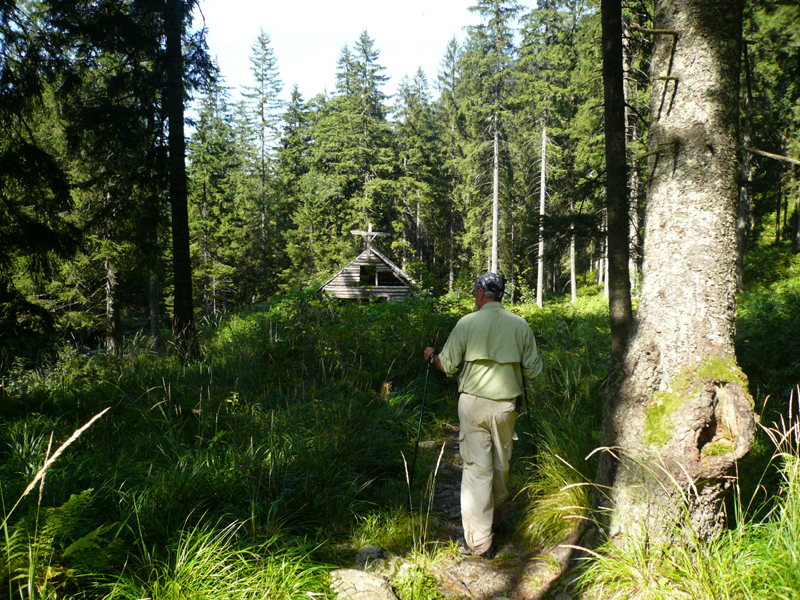
The complex lies at an altitude of 590 m and is the starting point for three waymarked trails. All of them require good fitness and a full day — they are not afternoon strolls.
| Trail | Route | Duration | Waymark |
|---|---|---|---|
| 1. Buteanu Ridge | Albota (590 m) → northern crest of the Buteanu ridge → the long hairpin bend of the Transfăgărășan (1,355 m) | 4.5 – 5 h one way | blue stripe |
| 2. Arpășel River | Albota (590 m) → Arpășel Valley → Arpășel glacial cirque (1,540 m) and back. The first 5.5 km on a forest road | 9 h in total 4–5 h ascent, 3.5–4 h descent | red dot |
| 3. Albota Ridge | Albota (590 m) → Prislop ridge → Furca Albotei peak (1,941 m). Elevation gain 1,351 m, about 9 km | 9 h in total 4.5 h ascent, 3.5 h descent | blue dot |
Trail 2 is of medium to advanced difficulty. For all three: set off early in the morning, take water and food with you, and check the forecast on the day.
Around the complex
Six places worth the trip
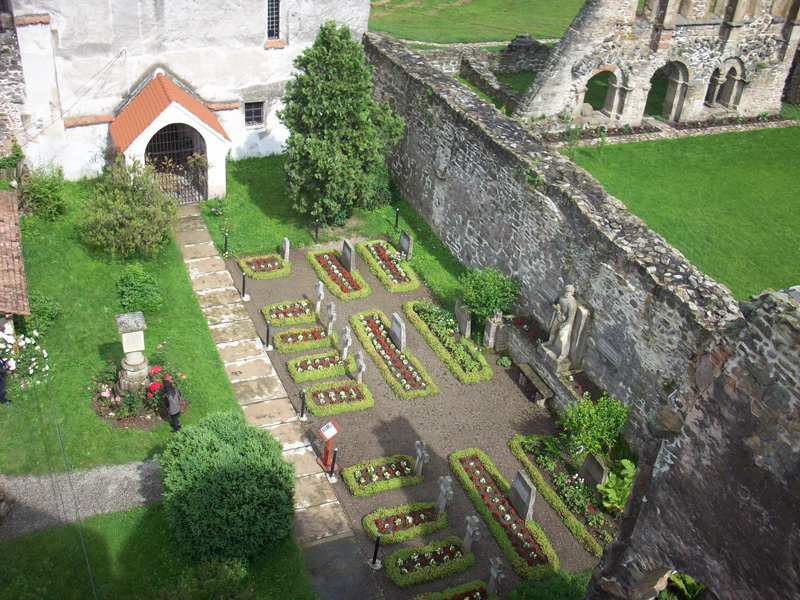
Cârța Cistercian Abbey · 16 km
The only Cistercian monastery in Romania, built in the 13th century. It impresses with its blend of Romanesque and early Gothic.
- The abbey ruins — the walls of the former dormitories and library, with Gothic windows and Romanesque arches
- The parish house — the oldest inhabited building in Transylvania
- The heroes’ cemetery — graves of German soldiers from the First World War
- The Evangelical church — an organ more than 200 years old, a Baroque altar, Sunday services
- The teacher’s house — a Saxon house set up as an ethnographic museum and information centre
| Admission | 10 lei adults · 5 lei children, students, pensioners |
| Opening hours | Monday – Sunday, 11:00 – 20:00 |
| Contact | Cârța Evangelical Church, str. Principală no. 110 · 0752 055 997 |
| Guided tours | Romanian, German, Hungarian — for groups, please call in advance |
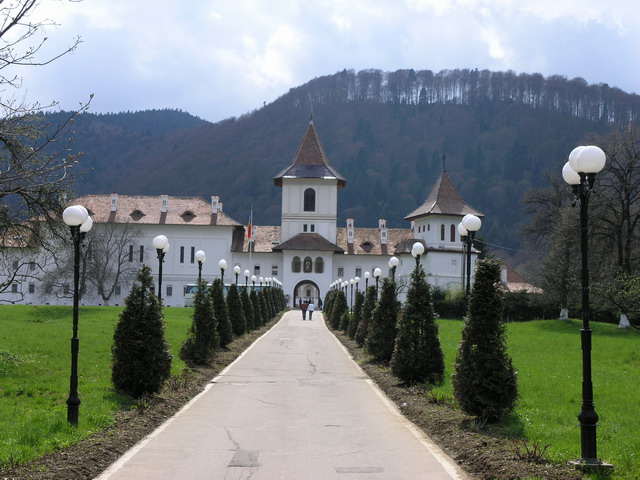
Brâncoveanu Monastery, Sâmbăta de Sus · 40 km
Founded in 1657 by Preda Brâncoveanu as a wooden church, and continued in stone from 1696 by the ruling prince Constantin Brâncoveanu. Destroyed in 1785, it was restored between 1926 and 1946 by Metropolitan Nicolae Bălan. From 1940 to 1944, its abbot was Father Arsenie Boca.
- The church in Brâncoveanu style, with regular services
- The glass icon painting workshop — the most important school of its kind in the country
- The museum, with icons painted on glass from the 18th–19th centuries
- The “Life-Giving Spring” fountain, the oldest feature within the monastery grounds
- The altar and spring of Father Arsenie Boca, in the surrounding forest
Sâmbăta de Sus commune, Brașov County, Zona Turistică no. 1 · 0770 314 635 · manastireabrancoveanu.ro
Arpășel Nature Reserve · free access
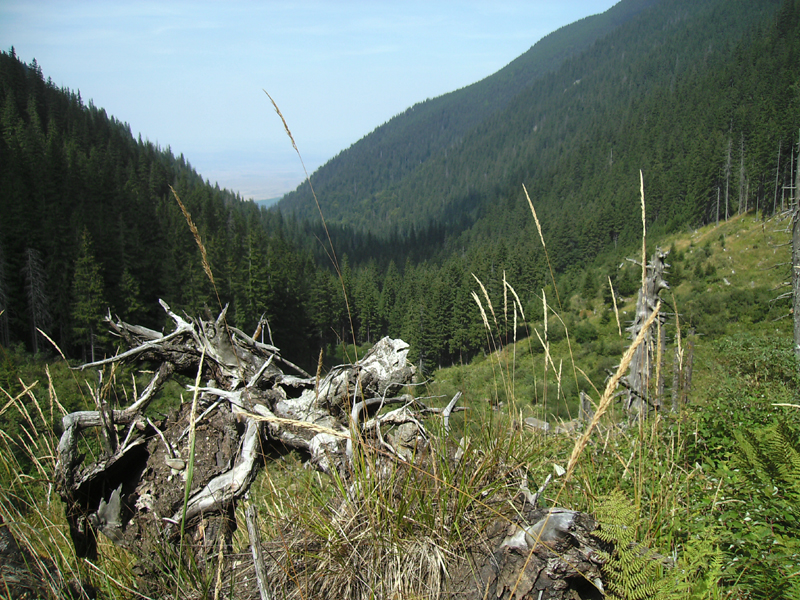
736 hectares on the northern slope of the Făgăraș Mountains, between Arpașu de Jos and Cârțișoara. This is home to the largest chamois population in the Făgăraș Mountains — about 80% of the total.
Alongside them live marmots, bears and wild boar, and among the birds of prey the golden eagle is the dominant species. It is the best place in the area for wildlife watching and photography.
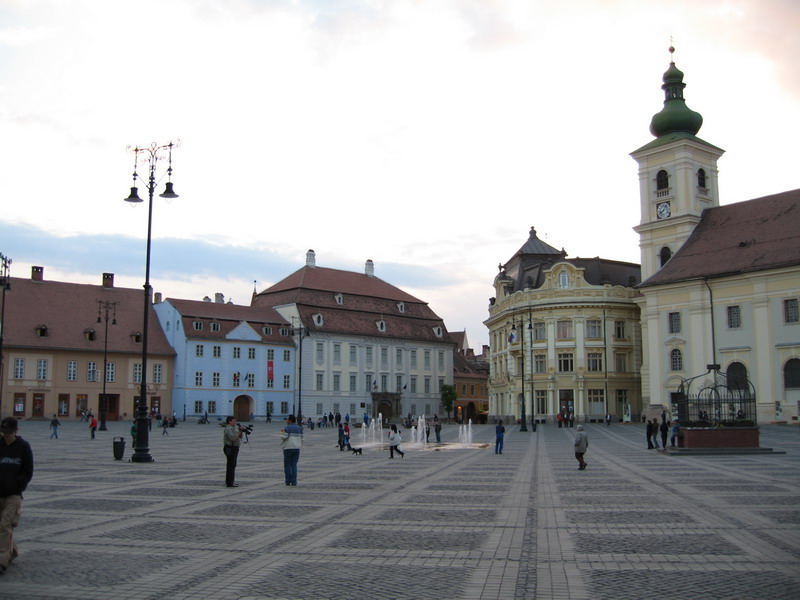
Sibiu — Hermannstadt
European Capital of Culture in 2007, with more than 800 years of history: medieval architecture, cobbled streets and well-preserved fortifications.
- The Large Square, with the Renaissance-style city hall
- The Evangelical Church, dating from the 14th century
- The Bridge of Lies, from 1859
- The Brukenthal Museum, with extensive collections of European art
- The Council Tower, with a panoramic view over the city
- The ASTRA Open-Air Museum, with traditional houses from all over the country
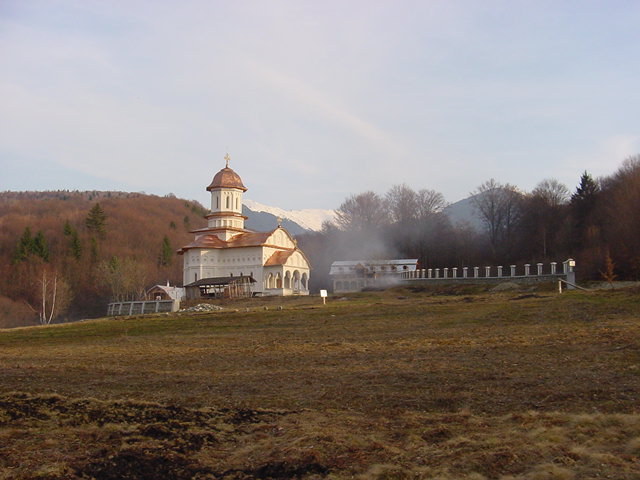
Cârțișoara Monastery · 3 km
“Holy Apostles Peter and Paul”, first recorded around 1400 under Mircea the Elder. Destroyed by the Austrian imperial troops, re-established in 1990.
It is 5 minutes by car from the complex — or almost an hour on foot, if you want to make it a morning walk.
Bâlea Lake and Bâlea Waterfall · The Transfăgărășan
The best-known sights in the area, 20 minutes from the start of the Transfăgărășan. We have written about them in detail in three separate articles:
From the area
The surroundings in pictures
Make Albota your base
The trails start here, and from here you can quickly reach any sight in the area.